Garage Storage Ideas for Totes, Bins, and Seasonal Gear
Garage storage ideas for totes, bins, and seasonal gear that keep tools, outdoor supplies, and holiday decor easy to find.
By Steve Watts · Co-Founder, Totely
May 18, 2026 · Updated June 6, 2026 · 14 min read
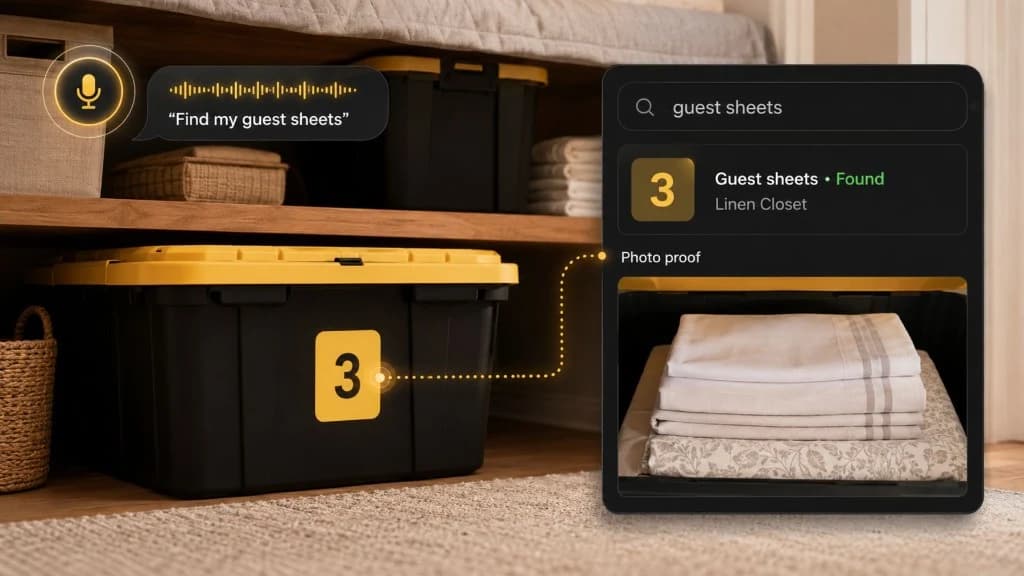
Garage storage can look organized and still be hard to use.
You can have sturdy shelves, matching totes, clear bins, wall hooks, and a clean floor — and still open five containers to find the extension cord, batteries, work gloves, tape, bungee cords, holiday lights, bike accessories, or sprinkler parts you know you already own.
That is the part most garage storage ideas miss.
A garage does not just need more places to put things. It needs a system that helps you find things later, especially when those things are hidden inside opaque totes, stacked bins, overhead shelves, seasonal containers, or shared family zones.
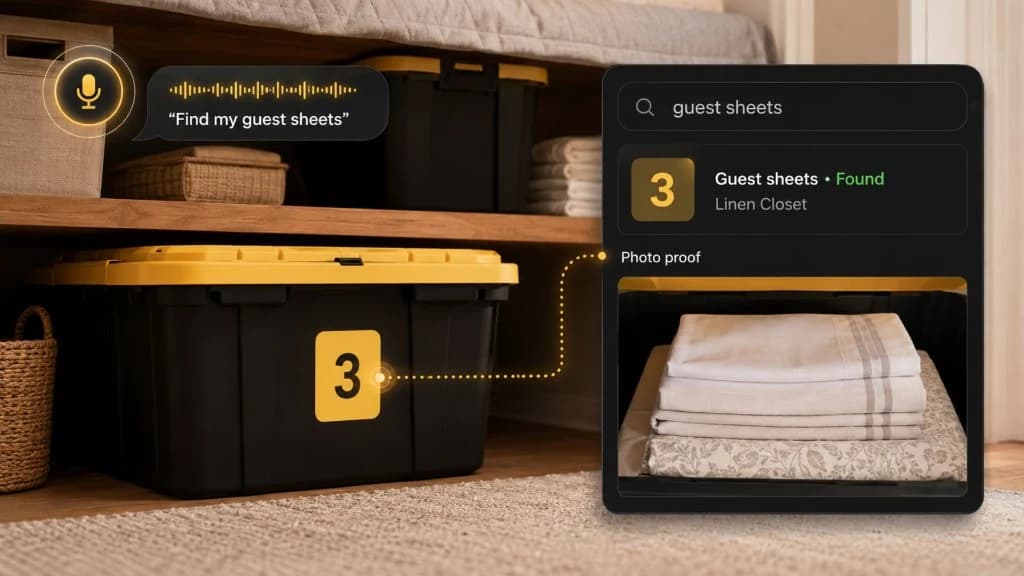
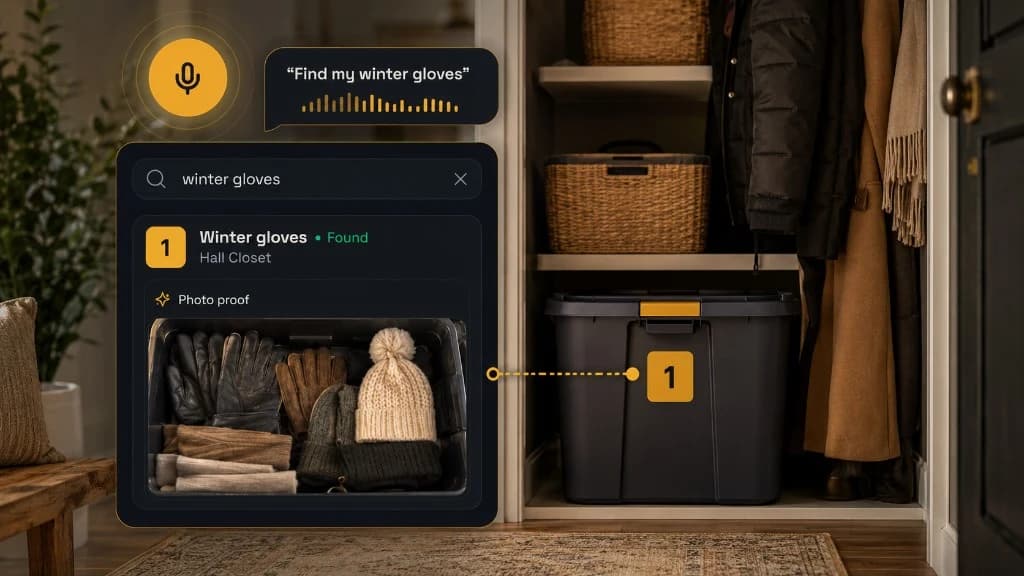
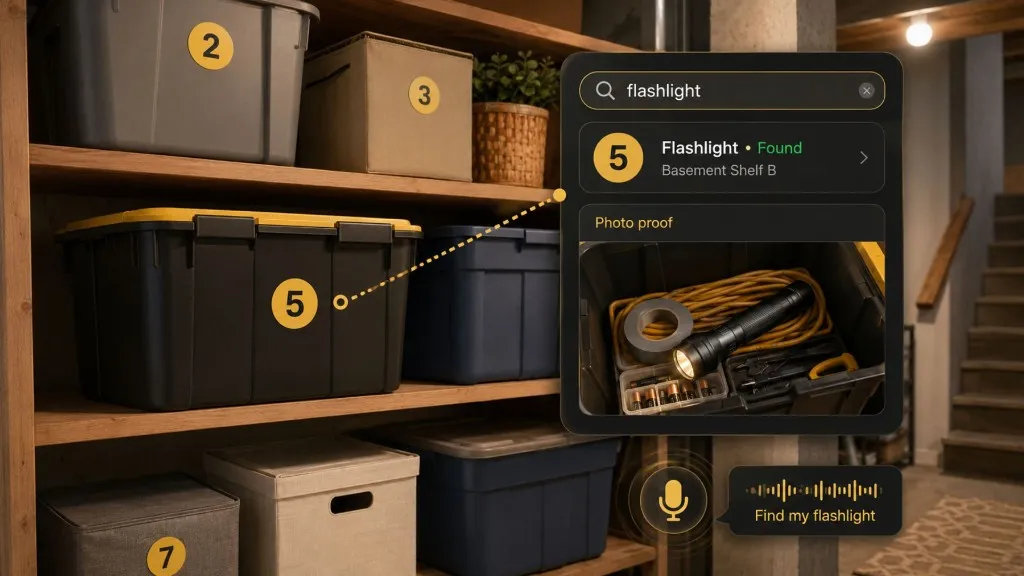
The best garage storage setup combines physical organization with a memory layer: zones, shelves, access levels, numbered totes, photos, locations, and searchable contents.
That way, your garage does not just look cleaner after organizing day.
It keeps working when someone needs one specific thing.
Quick Links
- Use Garage Zones Before Buying More Bins
- Create Grab-and-Go Bins for Everyday Items
- Use High Shelves for Light Seasonal Gear
- Keep Heavy Items Low and Easy to Access
- Build Seasonal Rotation Zones
- Make Sports, Bike, and Outdoor Gear Easy to Grab
- Use Numbered Totes Instead of Broad Labels
- How Totely Makes Garage Storage Searchable
- Garage Storage Ideas FAQs
Use Garage Zones Before Buying More Bins
Before you buy another tote, decide what each part of the garage should do.
A garage zone is a dedicated area for a type of storage or activity. Instead of letting every shelf become "garage stuff," give each zone a clear purpose.
You might create zones for car care, tools, garden supplies, sports gear, bikes, camping gear, holiday decor, household backstock, and seasonal items.
This matters because bins are only useful when they have a job. A bin labeled "miscellaneous garage" usually becomes a future problem. A zone labeled "quick repairs" is more useful because it tells you what belongs there and when you would use it.
For example, a quick-repair zone might hold extension cords, batteries, tape, flashlights, work gloves, bungee cords, small tools, and hardware. A garden zone might hold garden gloves, sprinkler parts, hose washers, plant ties, and outdoor clips. A seasonal zone might hold holiday lights, beach gear, winter gear, folding chairs, or camping gear.
A good garage zone answers the real question: What will I be trying to find here later?
Create Grab-and-Go Bins for Everyday Items
Not every garage bin should be sealed, stacked, and stored high.
Some bins need to be easy to grab because the items inside are used often. These are the supplies that disappear into the garage but get needed at the most inconvenient times: batteries, work gloves, tape, flashlights, small tools, bungee cords, bike accessories, sports balls, garden gloves, and car cleaning supplies.
Create a few grab-and-go bins for everyday garage items.
A grab-and-go bin should be low, visible, and easy to open. It should not require moving three other totes first. It should hold items that are used together, not just items that technically belong in the same category.
Quick Repair Bin
Extension cords, batteries, tape, flashlights, work gloves, small tools, bungee cords.
Bike and Sports Bin
Bike accessories, pump needle, sports balls, helmets, extra water bottles, practice cones.
Garden Quick-Start Bin
Garden gloves, sprinkler parts, hose washers, small hand tools, plant ties.
Car Care Bin
Microfiber towels, car cleaning supplies, tire gauge, interior wipes, vacuum attachments.
Better Homes & Gardens notes that boxing up frequently used outdoor toys can create an extra retrieval step that makes people less likely to put things back, which is why some items work better in open or easy-access storage.
That same principle applies to high-use garage supplies.
If your family reaches for it often, do not bury it.
Use High Shelves for Light Seasonal Gear
High shelves are best for items that are light, seasonal, and not needed every week.
This is where garage storage can get smarter. Instead of letting seasonal items take up prime shelf space year-round, move light occasional items higher or farther back.
Good high-shelf candidates include holiday decor, beach gear, lightweight camping gear, folding chairs, extra coolers, off-season sports gear, seasonal wreaths, winter gear bins, and patio cushions if your garage conditions are appropriate.
The key word is light.
Do not store heavy tool bins, dense hardware totes, or awkward containers overhead just because there is space. Car and Driver garage organization guidance recommends going vertical to free up floor space, but also emphasizes that wall storage should be mounted securely and anchored properly.
High storage is useful when it is safe and intentional.
Use it for the things you need occasionally, not the things you need quickly or struggle to lift.
Keep Heavy Items Low and Easy to Access
Heavy bins belong low.
This is one of the simplest garage storage ideas, but it is also one of the easiest to ignore when shelves start filling up. A giant tote of tools, hardware, paint supplies, or car gear might technically fit on a high shelf, but that does not mean it belongs there.
Store dense or heavy items at waist height or lower. That includes hardware, small tools, certain car care supplies, power tool accessories, heavy extension cords, and anything awkward to lift.
A simple rule works well here: light and seasonal can go high; heavy and frequent should stay low.
This keeps the garage easier to use and helps prevent the system from becoming annoying. If a bin is hard to pull down, people will avoid using it or stop putting things back correctly.
Also be thoughtful about what should not live in ordinary garage bins at all. Good Housekeeping warns that garages can be risky for items like paint, electronics, gasoline, oily rags, important papers, books, photos, clothing, linens, and pet food because of heat, moisture, pests, and safety concerns.
Garage storage should protect your belongings, not quietly damage them.
Build Seasonal Rotation Zones
Seasonal gear is one of the biggest reasons garages get messy.
Holiday lights, camping gear, folding chairs, beach gear, winter gear, sports equipment, garden supplies, and outdoor decor all rotate in and out through the year. If every season gets equal access all the time, your garage starts to feel crowded even when it is organized.
Create seasonal rotation zones.
Put the current season where it is easy to reach. Move off-season items higher, farther back, or into longer-term storage.
In summer, the easy-access area might hold beach gear, folding chairs, garden gloves, sports balls, bike accessories, car cleaning supplies, and sprinkler parts. In winter, that area might shift to snow gear, holiday lights, extension cords, work gloves, winter sports gear, and weather supplies.
The goal is not to reorganize the whole garage every season. It is to make a few smart swaps.
Think of your garage like a store shelf: the things you need now should be easiest to grab.
Everything else can wait its turn.
Make Sports, Bike, and Outdoor Gear Easy to Grab
Sports and bike gear should not always go in sealed totes.
If kids or family members use sports balls, helmets, bike accessories, scooters, gloves, and outdoor toys often, use open bins, wall hooks, mesh baskets, rolling carts, or low shelves.
Closed bins work better for off-season or less-used gear. Open storage works better for daily use.
Open bin: soccer balls, basketballs, bike helmets, jump ropes, cones. Low shelf bin: bike accessories, pump, patch kit, gloves, reflectors. Seasonal tote: off-season sports gear, extra cleats, winter gear, beach gear. Wall hooks: helmets, folding chairs, bike locks, backpacks, outdoor bags.
This is a good place to organize by real behavior, not just by category.
If the kids run into the garage looking for a ball, the ball should be visible. If the bike pump always disappears, it needs one clear home. If the beach gear only comes out a few times a year, it can live in a numbered tote with a photo record.
A garage that works for the people using it will stay organized longer.
Organize Holiday Decor Without Losing the Small Stuff
Holiday decor is one of the easiest garage categories to lose track of because the items are seasonal, visual, and full of small pieces.
A bin labeled "Holiday" might hold anything: holiday lights, clips, extension cords, ornament hooks, ribbon, wreath hangers, outdoor timers, spare bulbs, table decor, or garland.
That is why broad holiday labels are not enough.
Break holiday decor into practical use groups.
Holiday Setup Tote
Extension cords, outdoor timer, clips, spare bulbs, tape, batteries, wreath hanger.
Holiday Lights Tote
Indoor lights, outdoor lights, replacement bulbs, light reels, clips.
Decor Tote
Garland, wreath pieces, ornaments, ribbon, table decor, stockings.
Small setup items deserve special attention because they are the ones people often rebuy. Ornament hooks, clips, batteries, light timers, extension cords, and tape disappear easily when they are loose in a large tote.
Put those small items in a smaller bag or box inside the tote. Then number the tote and save a photo of what is inside.
Next season, you will not have to open every bin to find the one wreath hanger.
Create a Camping and Outdoor Gear Station
Camping and outdoor gear belongs together because it is usually packed by trip, not by category.
A camping station might include one shelf or bin group for lanterns, tent stakes, rope, headlamps, camp mugs, rain ponchos, air pump, camp kitchen supplies, bug spray, and folding chairs.
This is another place where retrieval pattern matters.
You do not want the lantern in a tool bin, the tent stakes in a random hardware box, and the camp mugs inside household backstock. You want the gear you use together to live together.
Use one or two numbered totes for smaller camping items, and keep larger items like chairs, tents, or sleeping pads nearby. If your camping gear is seasonal, move the full station into easier reach before the season starts and rotate it back afterward.
A photo-based record is especially useful here because camping gear often includes dark bags, small parts, and items that look similar. A search for "air pump" or "headlamp" should tell you exactly which tote to open.
Create a Household Backstock Zone
Garage shelves often hold household extras: paper towels, cleaning refills, batteries, light bulbs, tape, trash bags, extension cords, wipes, sponges, and bulk supplies.
This can be useful, but only if you know what is already there.
A household backstock zone helps prevent duplicate buying. Before you buy another pack of batteries, another roll of tape, or another box of light bulbs, you should be able to check your garage storage quickly.
Organize backstock by what people actually search for.
Utility Backstock Batteries, light bulbs, tape, extension cords, hooks.
Cleaning Backstock Refills, sponges, microfiber cloths, trash bags, car cleaning supplies.
Outdoor Backstock Garden gloves, sprinkler parts, hose washers, plant ties, outdoor clips.
The key is to avoid a vague "extras" bin. That label does not help when you are standing in a store wondering if you already have what you need.
A good backstock zone should answer: Do we already own this?
Use Numbered Totes Instead of Broad Labels
Labels help, but broad labels are not enough.
A tote labeled "Tools" tells you the general area. It does not tell you whether the tape, batteries, flashlight, or bungee cords are inside. A bin labeled "Outdoor" could mean garden gloves, camping gear, beach gear, sprinkler parts, or sports equipment.
Numbered totes work better because the number becomes the permanent identity.
Use simple numbers:
1 2 3 4
Then connect each number to a record of what is inside.
Tote 1 Location: Garage shelf, middle row Contents: extension cords, batteries, tape, flashlights, work gloves, bungee cords
Tote 2 Location: Garage shelf, top row Contents: holiday lights, clips, outdoor timer, spare bulbs, wreath hanger
Tote 3 Location: Garage shelf, bottom row Contents: garden gloves, sprinkler parts, hose washers, plant ties, small hand tools
The outside stays simple. The details stay searchable.
That is the difference between storage that looks organized and storage that actually helps.
See storage tote labels that work and how to keep track of storage bins for more on numbered systems. For a step-by-step bin workflow, read garage organization with bins.
How Totely Makes Garage Storage Searchable
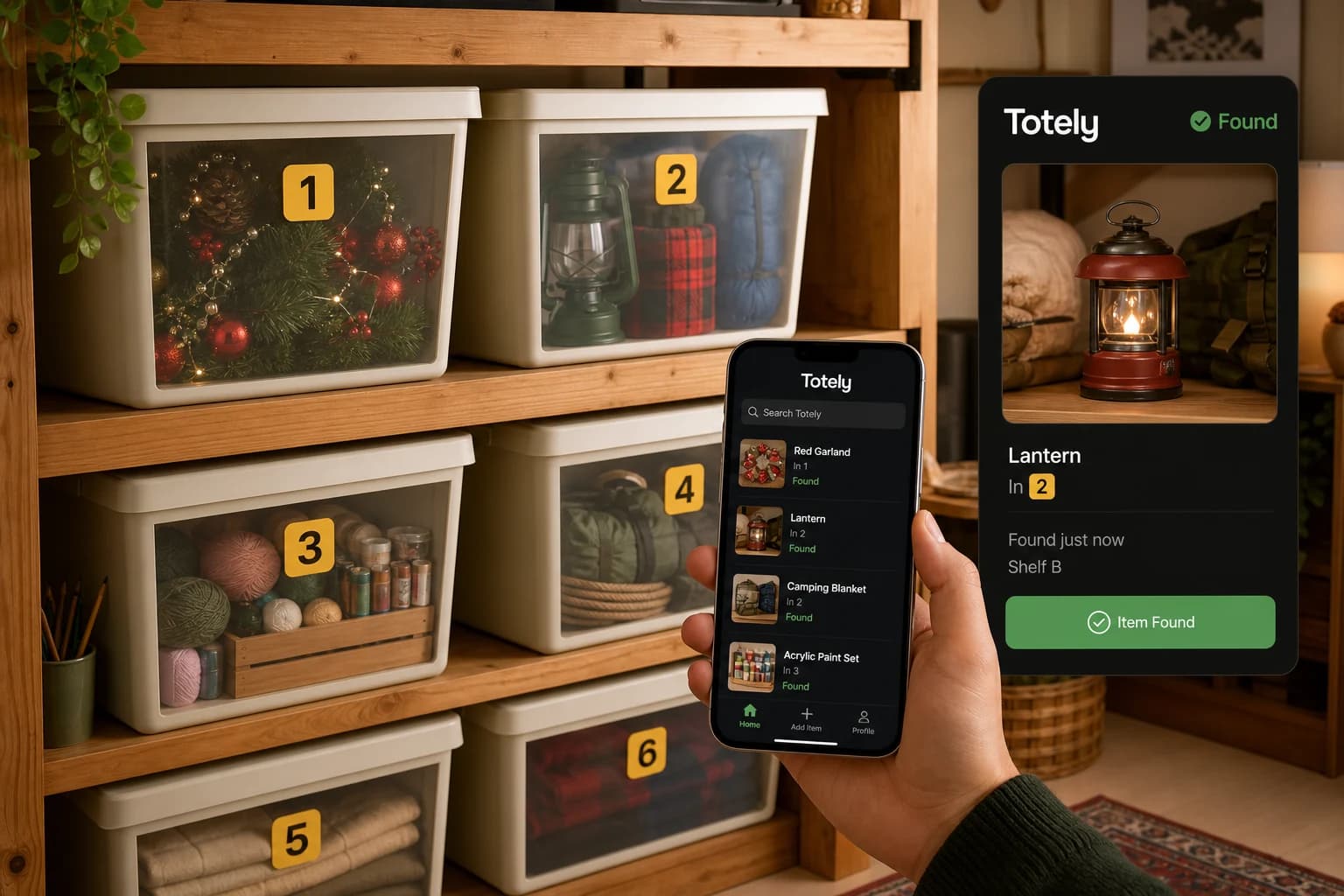
Totely is built for the real problem behind garage storage: you put useful things away, then forget which bin holds them.
Instead of relying on memory, vague labels, or opening every tote, Totely helps you make garage storage searchable.
Here is the simple flow:
Number the tote, bin, shelf, or garage zone
so it has a clear identity.
Snap a photo
of what is inside.
Let AI build the item list
from what it can see.
Review or edit if needed
so the words match how your household searches.
Save the garage location
so you know where the container lives.
Search naturally later
for "extension cords," "batteries," "holiday lights," "camping gear," "sports balls," "bike accessories," or "sprinkler parts."
Use photo proof
to confirm what is inside before opening the bin.
That means your garage ideas do not depend on perfect memory or manual typing.
Your shelves hold the bins. Totely helps you remember what is inside.
See the garage storage inventory use case for a full walkthrough.
A Simple Garage Storage Layout You Can Copy
Here is a practical idea-based layout that works for many garages.
A Simple Garage Storage Layout You Can Copy
Middle shelves
Everyday grab-and-go bins for quick repairs, car care, sports gear, bike accessories, batteries, tape, flashlights, and small tools.
Low shelves
Heavy bins, hardware, dense tool supplies, car cleaning supplies, and frequently used outdoor items.
High shelves
Light seasonal totes for holiday lights, beach gear, winter gear, camping extras, folding chairs, and off-season decor.
Wall hooks
Bikes, helmets, folding chairs, ladders, garden tools, and long-handled items.
Backstock zone
Household extras such as light bulbs, paper goods, cleaning refills, extension cords, and batteries.
Seasonal rotation zone
The items you are using this season, kept within easy reach until they rotate out.
Then give every tote, bin, and shelf zone a number. Snap a photo. Save the contents and location.
Simple does not mean bare minimum.
Simple means the system is easy enough to keep using.
For a full playbook, see the garage organization guide.
Garage Storage Ideas FAQs
What are the best garage storage ideas for totes and bins?
The best garage storage ideas use zones, shelves, grab-and-go bins, high storage for light seasonal items, low storage for heavy items, and numbered totes with saved contents. The goal is not just to stack bins neatly, but to make the items inside easy to find later.
How do I organize seasonal gear in the garage?
Create seasonal rotation zones. Keep the current season's gear within easy reach and move off-season gear higher, farther back, or into longer-term storage. Use numbered totes and photos so holiday lights, camping gear, beach gear, winter gear, and folding chairs are easy to find when the season changes.
Should garage storage bins be clear or opaque?
Both can work. Clear bins help you see some contents, but they are less useful when stacked, stored high, or packed tightly. Opaque bins can work well if they are numbered and connected to a searchable photo-based record of what is inside.
What should be stored high in a garage?
High garage shelves are best for light, occasional, seasonal items such as holiday decor, beach gear, folding chairs, winter gear, and lightweight camping supplies. Heavy, dangerous, fragile, or frequently used items should stay lower and easier to access.
How do I stop garage bins from becoming mystery containers?
Give every bin a simple number, take a photo of what is inside, save the key items, and record the exact garage location. When contents change, update the photo or record so the system stays trustworthy.
How can Totely help with garage storage?
Totely helps you number garage totes, bins, shelves, or zones, snap a photo, let AI build the first item list, review or edit if needed, save the location, and search naturally later. Photo proof shows what is inside before you open a bin.
Make Your Garage Easier to Search, Not Just Easier to Stack
A better garage is not just a garage with more bins.
It is a garage where you can find what you already own.
Start with one zone. Create a few useful bins. Keep everyday items easy to grab. Store seasonal gear where it makes sense. Keep heavy items low. Number every tote. Snap a photo. Save what is inside.
With Totely, your garage storage can become searchable, so the extension cords, batteries, work gloves, holiday lights, camping gear, sports balls, bike accessories, car cleaning supplies, garden gloves, and sprinkler parts are easier to find when you need them.
Try the One-Tote Test on one garage bin before you expand the system to every shelf.