How to Label Moving Boxes Before a Big Move
Learn how to label moving boxes with room names, box numbers, priority levels, photos, and searchable contents before a big move.
By Ben Stallsworth · Co-Founder, Totely
May 12, 2026 · Updated June 6, 2026 · 15 min read
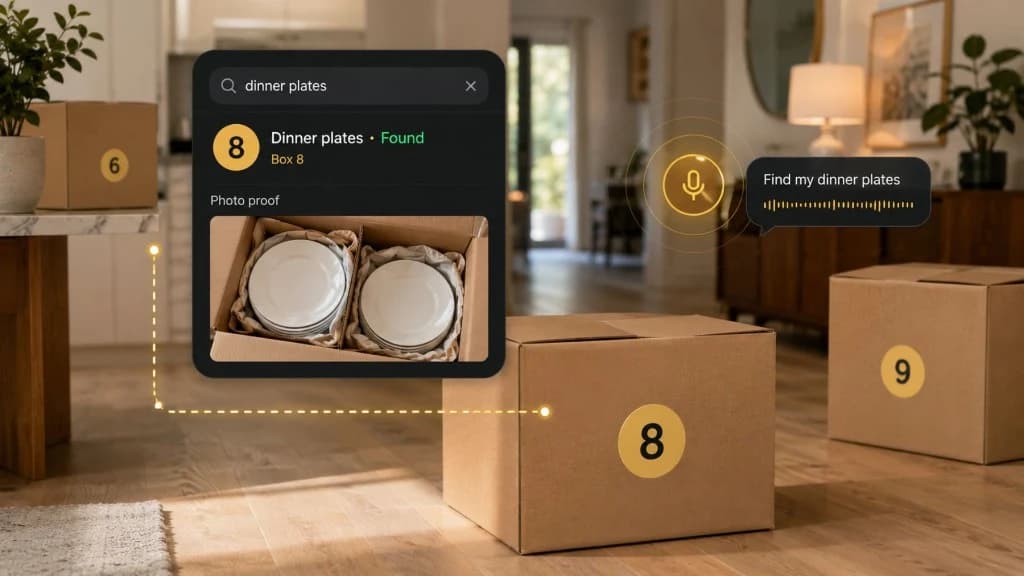
Moving box labels usually make sense while you are packing.
You write "Kitchen," "Bedroom," "Bathroom," or "Office" on the outside, seal the box, and feel like you are making progress. Then moving day happens. Boxes get stacked. Helpers carry them to different rooms. Some boxes go to storage. Some stay packed for weeks. The box labeled "Kitchen" could hold mugs, spices, scissors, coffee filters, extension cords, small appliances, or the one thing you need before breakfast.
That is why how to label moving boxes matters so much before a big move.
A good label does more than name the room. It helps movers place the box correctly, helps you find the right box first, and helps future-you search for specific items after the truck is unloaded.
The best moving box labeling system uses five simple details: box number, destination room, priority, key contents, and a photo before sealing. It should be clear enough for movers, specific enough for unpacking, and flexible enough for boxes that may become temporary or long-term storage.
Quick Links
- Why Moving Box Labels Fail After Moving Day
- Step 1: Give Every Box a Number
- Step 2: Add the Destination Room
- Step 3: Mark the Priority Level
- Step 4: Write Key Contents, Not Every Item
- Step 5: Add Special Notes for Fragile, Heavy, or Open-First Boxes
- Step 6: Photograph Contents Before Sealing the Box
- Step 7: Track Where Each Box Ends Up
- Label Examples for Common Moving Boxes
- How Totely Makes Moving Boxes Searchable
- Moving Box Label FAQs
Why Moving Box Labels Fail After Moving Day
Most moving box labels fail because they are written for packing, not unpacking.
A room name helps, but it does not tell you what is inside. A box labeled "Kitchen" could be everyday dishes, fragile glassware, mugs, cookware, pantry items, coffee supplies, small appliances, or junk drawer odds and ends. A box labeled "Bedroom" could be bedding, chargers, clothes, remotes, important documents, or sentimental items.
Labels also fail because boxes move.
A bathroom box may land in a hallway. Office boxes may get stacked in a spare bedroom. Garage boxes may go to a storage unit. Kids' room boxes may be split between bedrooms. Boxes that were supposed to be unpacked quickly may stay sealed for weeks or months.
That is why room names alone are not enough.
A better label system tells you:
Which box is this? Where should it go? How soon should it be opened? What key items are inside? Is there anything special to know before moving or opening it?
The goal is not to create a perfect inventory of every object. The goal is to label enough that you can find the coffee maker, chargers, medications, pet supplies, baby supplies, bedding, remotes, hardware, towels, toiletries, and important papers without opening ten boxes first.
For a companion guide on what to write on each label, see moving box labels: what to write.
Step 1: Give Every Box a Number
Every moving box should have a number.
The number gives the box a stable identity, even if the outside label gets smudged, the room changes, or the box ends up in storage.
Use simple numbers:
Box 1 Box 2 Box 3 Box 4
Do not restart the numbering in every room unless you have a strong reason. Whole-move numbering makes it easier to track boxes across the entire move.
For example:
Box 8 can always refer to the coffee maker box. Box 14 can always refer to the primary bedroom bedding box. Box 22 can always refer to the garage hardware box. Box 31 can always refer to storage-unit holiday decor.
If a box is missing, duplicated, or sent to the wrong room, the number helps you identify it quickly.
A moving expert quoted by Better Homes & Gardens recommends numbering boxes and tracking contents on a phone so you are not digging through several similar boxes to find one item.
That is the core idea: the number is the shortcut.
See how to label storage bins and storage tote labels that work for the same numbering approach when boxes become long-term storage totes.
Step 2: Add the Destination Room
Next, add the destination room.
This should be the room in the new home, not necessarily the room where the item came from.
For example, books packed in the current dining room may belong in the new office. Bedding packed from a guest closet may belong in the new guest room. Garage overflow may belong in the new storage unit.
Use clear destination labels:
Kitchen Primary Bedroom Kids' Room Bathroom Office Garage Storage Unit Laundry Room Hall Closet
If you are using movers or helpers, destination rooms matter because they help boxes land in the right place the first time. Southern Living notes that detailed destination labels, such as a room plus a more specific location, can help movers place boxes correctly and reduce rearranging later.
Use the destination that will make sense to someone who has never seen your packing system.
Not: Back room stuff
Better: Office closet
Not: Kids
Better: Ella's Room
Not: Storage
Better: Storage Unit Front Row
Not: Bedroom
Better: Primary Bedroom
Step 3: Mark the Priority Level
Priority tells you when the box should be opened.
This is different from the room. Two boxes may both be labeled "Kitchen," but one needs to be opened the first night and the other can wait two weeks.
Use simple priority levels:
Open First Needed immediately.
First Night Needed for the first evening and morning.
First Week Useful soon, but not urgent.
Storage Does not need to be unpacked right away.
Later Safe to leave packed until the room is ready.
Your first-night box is especially important. It might include toiletries, towels, chargers, medications, basic kitchen items, pet supplies, baby supplies, bedding, a change of clothes, toilet paper, scissors, trash bags, and anything else you need before the house is unpacked.
Use cautious handling for medications, important documents, valuables, liquids, cleaning supplies, batteries, food, and fragile items. Follow mover instructions, product labels, safety guidance, and your own household needs. Keep truly essential personal items with you rather than buried in the moving truck.
The Spruce recommends clearly marking essential boxes as "Open First" and noting their room location so they are easy to access upon arrival.
That small label can save a very tired version of you from opening five boxes just to find toothpaste.
Step 4: Write Key Contents, Not Every Item
Do not try to write every item on the outside of every box.
That makes packing slow, and long exterior labels become hard to read.
Instead, write the key contents: the few items someone is most likely to search for later.
For example:
Kitchen — Open First Coffee maker, mugs, filters, dish towels, scissors.
Bathroom — First Night Toiletries, towels, shower curtain rings, toilet paper.
Kids' Room — First Week School papers, favorite books, bedding, nightlight.
Garage — Storage Hardware, extension cords, batteries, screws, tape.
Office — Open First Laptop charger, router, monitor cables, desk supplies.
Pet Supplies — Open First Food bowls, leash, waste bags, pet bed, food container.
This keeps the outside label useful without turning every box into a long inventory project.
Use the words you will actually search for later: chargers, medications, toiletries, pet supplies, baby supplies, bedding, remotes, hardware, screws, important documents, coffee maker, extension cords, batteries, holiday lights, family recipes, sentimental items.
A good label helps you find the thing you need, not just the room it belongs to.
Step 5: Add Special Notes for Fragile, Heavy, or Open-First Boxes
Some boxes need an extra note.
Use short, visible handling notes only when they matter.
Common notes include:
Fragile For glassware, dishes, artwork, lamps, decor, ceramics, frames, or other breakable items.
Heavy For books, tools, hardware, small appliances, or dense items.
Open First For first-night and first-morning essentials.
This Side Up For items packed with a clear orientation.
Do Not Stack For delicate items when appropriate.
Storage Unit For boxes that should not be unloaded into the main living area.
Important Documents Use cautious wording and consider carrying sensitive documents yourself.
Baby Supplies For diapers, bottles, sleep items, feeding supplies, or comfort items needed quickly.
Pet Supplies For food, bowls, leash, medication if applicable, or cleaning supplies.
Do not rely on special notes to replace proper packing. Fragile items still need careful packing. Heavy boxes still need safe lifting. Liquids, cleaning supplies, batteries, food, medications, documents, and valuables may require special handling, separate transport, or mover-specific rules.
Totely can help you remember what is inside a box, but it does not replace professional moving guidance, safety requirements, legal documents, insurance documentation, or proper handling instructions.
Step 6: Photograph Contents Before Sealing the Box
Before you seal the box, take a photo.
This is one of the easiest ways to make moving boxes easier to search later.
A photo can show what "Kitchen — Open First" actually means. It can show whether the box includes the coffee maker, filters, mugs, dish towels, scissors, and charger. It can show whether a bathroom box includes toiletries, towels, medicine cabinet items, or cleaning supplies. It can show whether the garage box has hardware, extension cords, batteries, hooks, screws, remotes, or tool parts.
Photos are especially useful for boxes that may stay packed:
Storage-unit boxes Seasonal decor, holiday lights, tools, family recipes, sentimental items, books, extra kitchenware.
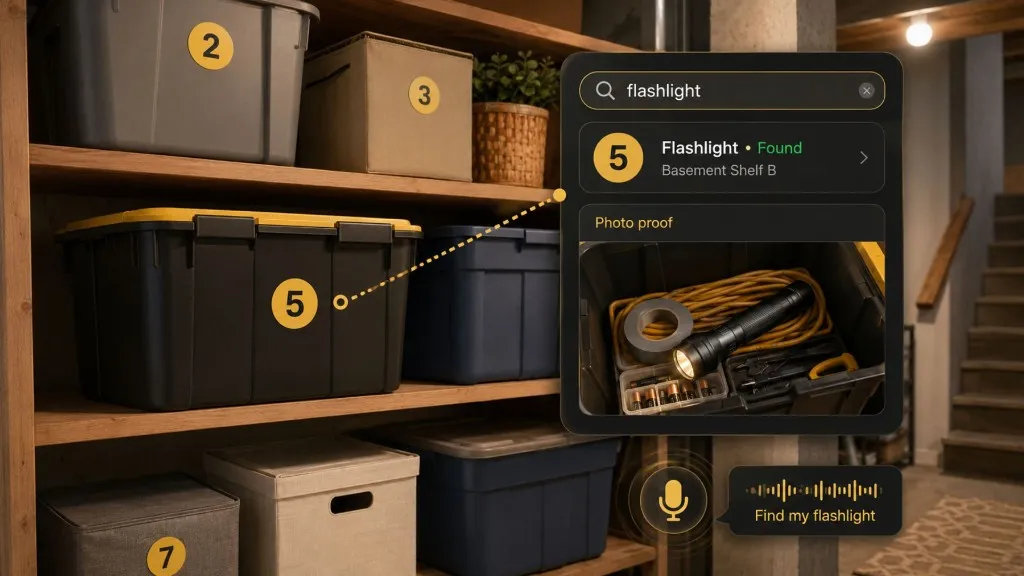
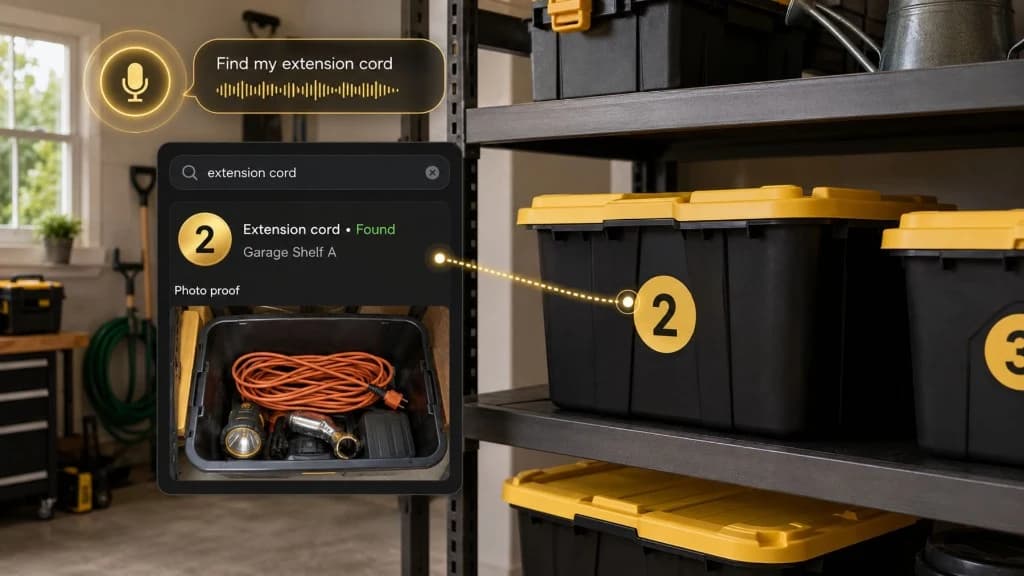
Garage boxes Hardware, screws, tools, extension cords, batteries, cleaning supplies, paint supplies with cautious handling.
Office boxes Cables, chargers, documents, electronics, monitors, desk supplies.
Kids' room boxes School papers, books, toys, baby supplies, bedding, comfort items.
Sentimental boxes Photo albums, family recipes, keepsakes, inherited items, letters.
If you photograph the contents before sealing, you do not have to rely on memory after the move.
The photo becomes proof of what was inside when the box was closed.
Step 7: Track Where Each Box Ends Up
Moving boxes do not always go exactly where you planned.
Some boxes land in the wrong room. Some go to a garage temporarily. Some get stacked in a hallway. Some go to a storage unit. Some become accidental long-term storage.
That is why your labeling system should include the destination location and, later, the final location.
Examples:
Kitchen counter For open-first cooking and coffee items.
Primary bedroom closet For bedding, clothes, chargers, personal items.
Kids' room closet For school papers, books, bedding, toys.
Garage shelf For tools, extension cords, hardware, seasonal items.
Storage unit front row For boxes that may stay packed for weeks or months.
Hall closet For towels, toiletries, paper goods, guest linens.
If a box is not unpacked right away, update its location. This is especially helpful for boxes that become long-term storage.
A moving box labeled "Kitchen" is not very useful six months later if it is actually sitting on a garage shelf.
A box record that says "Box 12 — Kitchen small appliances — Garage shelf, middle row" is much easier to find.
See keep track of storage bins for the same location-tracking approach when moving boxes become packed storage, and create a home inventory without a spreadsheet for a broader household record.
Label Examples for Common Moving Boxes
Use these examples as a starting point.
Label Examples for Common Moving Boxes
Kitchen Open-First Box
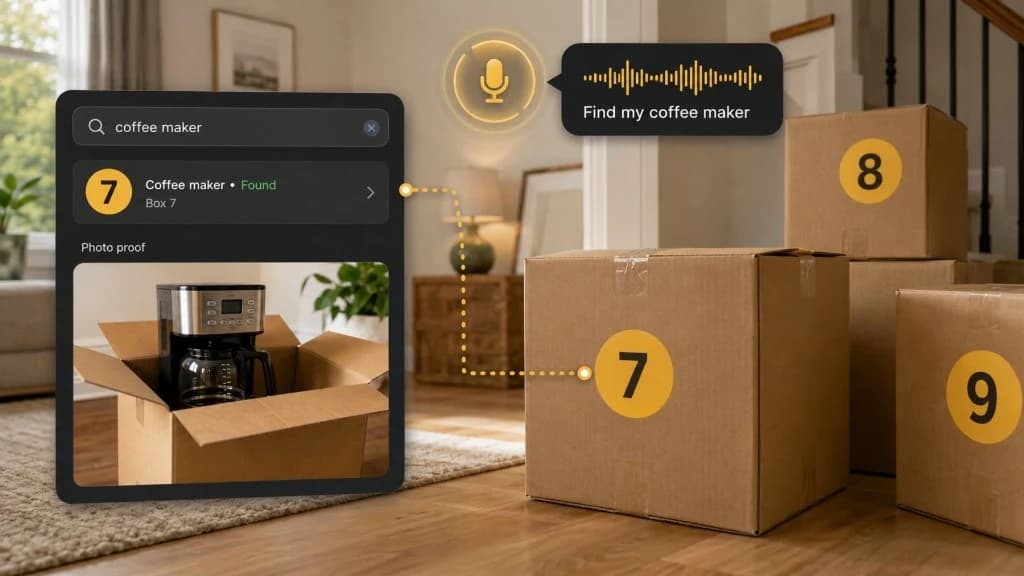
Box 8. Room: Kitchen. Priority: Open First. Note: Set on counter. Contents: coffee maker, mugs, filters, dish towels, scissors, paper towels.
Bathroom First-Night Box
Box 9. Room: Bathroom. Priority: First Night. Note: Open before bedtime. Contents: toiletries, towels, toilet paper, shower curtain rings, basic cleaning wipes.
Primary Bedroom Box
Box 14. Room: Primary Bedroom. Priority: First Night. Note: Bedding. Contents: sheets, pillows, blanket, phone chargers, pajamas.
Kids' Room Box
Box 18. Room: Kids' Room. Priority: First Week. Note: School morning. Contents: school papers, favorite books, bedding, nightlight, comfort item.
Office Setup Box
Box 21. Room: Office. Priority: Open First. Note: Cables. Contents: laptop charger, monitor cable, router, keyboard, mouse, desk supplies.
Garage Hardware Box
Box 27. Room: Garage. Priority: First Week. Note: Heavy. Contents: hardware, screws, hooks, tape, extension cords, batteries, small tools.
Storage-Unit Holiday Box
Box 31. Room: Storage Unit. Priority: Storage. Note: Seasonal. Contents: holiday lights, Christmas decorations, wrapping supplies, gift tags, sentimental ornaments.
Sentimental Box
Box 36. Room: Hall Closet. Priority: Later. Note: Fragile / Keepsakes. Contents: family recipes, photo albums, letters, sentimental items.
This is detailed enough to help, but not so detailed that packing takes forever.
How Totely Makes Moving Boxes Searchable
Totely helps moving box labels keep working after moving day.
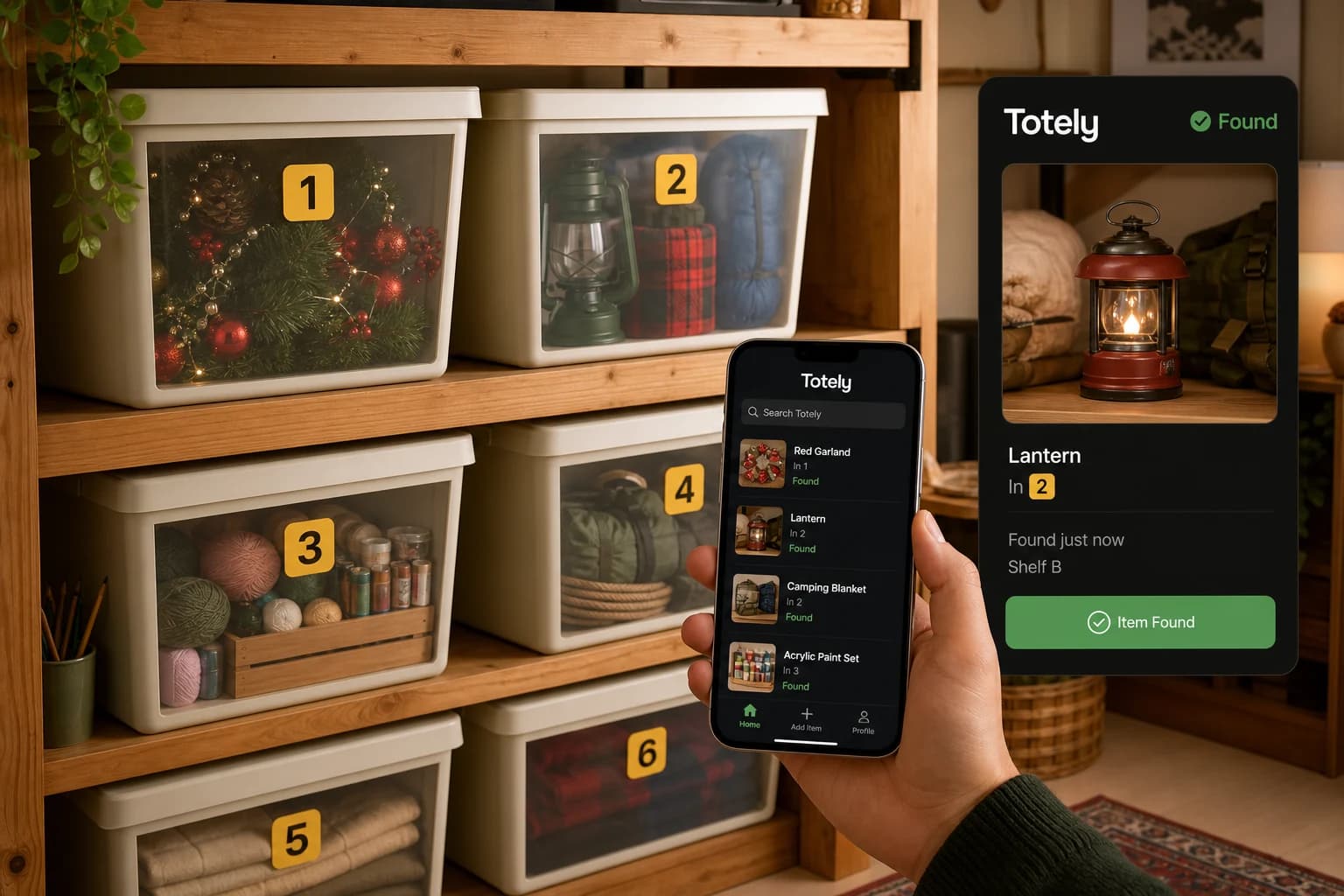
Instead of relying only on marker labels, you can make each box searchable with a simple number, photo, destination, and item record.
Here is the simple flow:
Number each moving box, tote, bin, shelf, or storage zone
so it has a clear identity.
Add the destination room and priority level
so the box can be unloaded in the right place.
Snap a photo before sealing the box
so you have visual proof of what is inside.
Let AI build the first item list
from what it can see.
Review or edit if needed
so the words match how you will search later.
Save the destination location
such as "kitchen counter," "primary bedroom closet," "garage shelf," "storage unit front row," or "kids' room."
Add notes
like "open first," "fragile," "heavy," "baby supplies," "pet supplies," "important documents," or "storage unit."
Search naturally later
for "coffee maker," "chargers," "pet supplies," "bedding," "hardware," "holiday lights," "family recipes," or "remote."
Use photo proof
to confirm what is inside before opening every box.
Totely does not require QR codes, barcodes, or manual entry of every item.
Moving box labels work best when the outside gives quick direction and the contents are searchable. Totely reduces maintenance friction by helping you number each box, snap one photo, save the destination location, and search naturally later.
Try the One-Tote Test on your open-first box, or use the home inventory checklist to build a broader household record after the move.
A Moving Box Labeling System You Can Copy
Here is a simple format you can use for every box.
Outside label: Box #: Room: Priority: Special note:
Searchable record: Box number: Destination: Photo: Key contents: Notes:
Example:
Outside label: Box 8 Room: Kitchen Priority: Open First Special note: Set on counter
Searchable record: Box number: 8 Destination: Kitchen counter Photo: Contents before sealing Key contents: coffee maker, mugs, filters, dish towels, scissors Notes: Open first on moving morning
For most boxes, this takes less time than writing a long item list on the outside.
The outside tells movers where the box goes. The record tells you what is actually inside. The photo helps you confirm before opening. The priority tells you what to unpack first.
That is enough structure to reduce stress without turning the move into an admin project.
Moving Box Label FAQs
What is the best way to label moving boxes?
The best way to label moving boxes is to include a box number, destination room, priority level, key contents, and any important special note. Take a photo before sealing the box and keep a searchable record if the contents may matter later.
Should I number moving boxes?
Yes. Numbering moving boxes gives each box a stable identity. Room labels can repeat, but box numbers make it easier to track a specific box, search contents, confirm whether boxes are missing, and manage boxes that go to storage.
What should I write on an open-first moving box?
Write the box number, room, "Open First," and the key contents. Open-first boxes often include coffee supplies, toiletries, chargers, towels, bedding, medications with cautious handling, pet supplies, baby supplies, scissors, paper towels, and basic first-night items.
Should I label moving boxes on more than one side?
Yes. Label at least the top and one visible side, and consider labeling multiple sides if boxes will be stacked. Better Homes & Gardens recommends labeling all sides because boxes get stacked, making single-side labels hard to see.
How do I label boxes that are going to storage?
Label storage-bound boxes with a box number, destination such as "Storage Unit," priority such as "Storage," key contents, and a specific location if known, such as "storage unit front row." Take a photo before sealing so the box stays searchable if it remains packed for weeks or months.
How can Totely help with moving box labels?
Totely helps you number boxes, snap photos, let AI build the first item list, review or edit it, save destination locations, add notes, and search naturally later. Photo proof helps you confirm what is inside before opening every box.
Label for the Move You Are Actually Having
A good moving box label is not just for moving day.
It is for the first night, the first week, the storage unit, the boxes you unpack last, and the one box you will desperately need when everyone is tired.
Start with one simple system: box number, room, priority, key contents, special note, photo, and destination.
With Totely, your moving boxes can become searchable, so kitchen boxes, bathroom boxes, bedroom boxes, kids' room boxes, office boxes, garage boxes, tool boxes, craft boxes, first-night boxes, first-week boxes, fragile glassware, dishes, mugs, chargers, toiletries, pet supplies, baby supplies, bedding, towels, small appliances, hardware, remotes, seasonal decor, holiday lights, sentimental items, family recipes, storage-unit boxes, and long-term packed boxes are easier to find.
The move is already enough.
Your boxes should not become another mystery.