Garage Overflow Storage
Garage overflow storage is the household overflow that migrates into the garage when closets, cabinets, laundry rooms, spare rooms, or entry areas run out of space.
What garage overflow storage means
Garage overflow storage is the household overflow that migrates into the garage when normal indoor storage runs out — closets, cabinets, laundry rooms, spare rooms, and entry areas.
It is not a formal storage plan. It is what happens when everyday life outgrows the rooms where things are supposed to live. Guest linens land on a shelf. Extra paper towels stack near the door. Holiday decor waits for next season. Donation bags sit until someone has time to drop them off.
Garage overflow is common, practical, and often unavoidable. The challenge is not having extra items in the garage. The challenge is not knowing what is where once the garage becomes the household waiting room.
Why garage overflow storage becomes a problem
Garage storage overflow is rarely planned. Items arrive from different rooms, seasons, and categories — and they rarely arrive with a system attached.
- It is rarely planned. The garage becomes the default landing zone when indoor space runs out.
- Items come from different rooms and categories, so one shelf can hold linens, decor, tools, and donation bags at once.
- Donation bags, guest linens, seasonal decor, backstock, tools, sports gear, kids' items, and backup kitchen gear get mixed together.
- The garage becomes a waiting room for items without a clear home.
- The problem is not just clutter. It is not knowing what is where when you need something later.
Common examples of garage overflow
Garage overflow storage often includes practical household items like:
- Guest linens
- Extra paper towels and household backstock
- Holiday decor and seasonal overflow storage
- Seasonal clothes
- Camping gear
- Kids' hand-me-downs
- Sports equipment
- Donation bags
- Extra kitchen appliances
- Documents or keepsakes that should not live loose in the garage
How to organize garage overflow storage
A workable garage overflow system does not need a full weekend reset. It needs a repeatable loop: sort, zone, number, photograph, and save the location.
- Sort overflow by why it is in the garage: seasonal, backup, donation, occasional use, sentimental, or moving/temporary.
- Create garage storage zones so each shelf or wall has a job.
- Use sturdy garage storage bins or totes instead of loose piles.
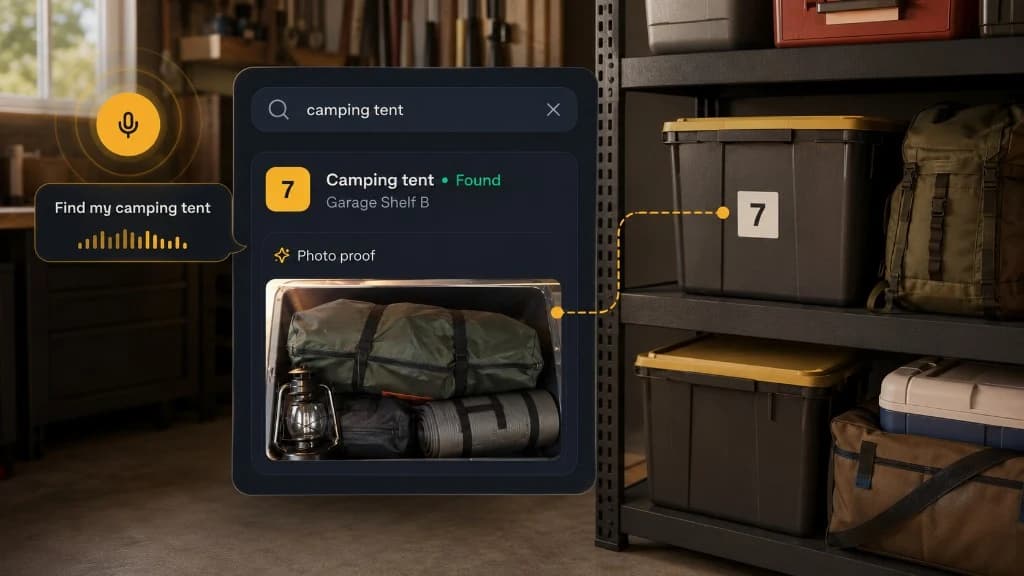
- Give each container a simple large number — not written category labels that fade or peel.
- Photograph contents before closing the container so the record stays visual.
- Save the exact location: Garage Shelf A, upper rack, left wall, donation corner, and similar plain-language spots.
- Review donation and temporary overflow regularly so the garage does not become long-term storage by default.
- Avoid vague labels like "misc," "stuff," or "garage things."
A simple garage overflow system you can copy
Start with five zones. Number the containers inside each zone. Keep the outside simple and the details searchable.
Zone 1: Household backstock
Paper goods, cleaning refills, pantry overflow, batteries.
Zone 2: Seasonal decor
Holiday lights, wreaths, outdoor timers, extension cords.
Zone 3: Guest and hosting items
Sheets, towels, air mattress gear, spare serving pieces.
Zone 4: Donation / outgoing
Bags and boxes waiting for drop-off — with a revisit date.
Zone 5: Sports and outdoor gear
Camping, bikes, beach gear, balls, pads, and seasonal sports items.
Example numbered containers
Concrete container records make garage overflow easier to search later:
- Tote 1: guest sheets, spare towels, air mattress pump
- Tote 2: outdoor lights, extension cords, timer plugs
- Tote 3: camping stove, lantern, tent stakes
How Totely helps with garage overflow storage
Totely turns garage overflow into searchable storage. The container gets a simple number. The app remembers the contents, photo, and location. You can search for a real item like "extension cord," "guest sheets," or "camping stove" without opening every bin on the shelf. The outside stays simple. The details stay searchable. That helps prevent the garage from becoming a second mystery closet. Pair numbered storage tote labels with photo records and natural search inside a broader storage organization system.
When garage overflow should not stay in the garage
Garages can be useful overflow space, but not everything belongs there loosely. Use sealed containers and choose locations thoughtfully.
- Avoid storing sensitive documents, photos, or important records loose where moisture, dust, or temperature swings are possible.
- Keep fragile keepsakes, heirlooms, and sentimental items in sealed bins — or in indoor storage when practical.
- Be cautious with temperature-sensitive electronics, fabrics, wood, artwork, or anything moisture-sensitive.
- Follow product labels and manufacturer guidance for items that need climate-stable storage.
- When in doubt, photograph what is inside, note the container number, and choose a safer shelf or indoor zone.
Related reading
Garage overflow storage works best when it connects to the rest of your household system. Explore garage organization ideas, garage storage ideas for totes and bins, a searchable home inventory app, and glossary terms for garage inventory and garage storage zone.
FAQs
What is garage overflow storage?
Garage overflow storage is the household overflow that moves into the garage when closets, cabinets, laundry rooms, spare rooms, or entry areas run out of space. It often includes backstock, seasonal items, guest supplies, donation bags, sports gear, and backup household gear.
What should go in garage overflow storage?
Good candidates include household backstock, seasonal decor, guest linens, camping gear, sports equipment, donation bags, occasional-use kitchen gear, and temporary moving overflow. Group items by why they are in the garage and keep frequently needed items easier to reach.
How do I keep garage overflow from becoming clutter?
Sort by purpose, create zones, use sturdy bins, number each container, photograph contents, save exact shelf locations, and review donation or temporary overflow on a schedule. Avoid vague labels and loose piles that nobody can search later.
What should not be stored loosely in the garage?
Be careful with sensitive documents, photos, fragile keepsakes, temperature-sensitive electronics, fabrics, wood furniture, artwork, and moisture-sensitive items. Use sealed containers, choose shelf height thoughtfully, and move especially sensitive belongings indoors when practical.
How do I label garage overflow bins?
Use a simple large number on each tote or box. Keep written category names inside the app or notes, not as the only label on the container. Pair the number with a photo record and a saved location such as Garage Shelf A or upper rack left.
How can I find items in garage storage later?
Number each container, photograph what is inside, save the shelf or zone location, and search naturally for real items like extension cords, guest sheets, or camping gear. Photo proof helps confirm the right bin before you open everything on the shelf.
Related resources
Related terms
Garage inventory
A searchable record of tools, gear, and totes in the garage.
Learn more →Garage storage zone
A labeled area in the garage—wall, rack, corner—for a category of items.
Learn more →Storage zone
A defined area where storage lives—garage shelf, closet top, attic corner, or basement rack.
Learn more →Seasonal storage
Items used part of the year—holiday decor, wardrobe swaps, sports gear.
Learn more →Start with one garage overflow tote
Give it a number, take a photo, save the location, and make it searchable with Totely.